



Mark Wade has spent much of his career directly contributing to the development of sustainable investing at Allianz Global Investors. In this interview, he reflects on the profound changes that have shaped his field of expertise.
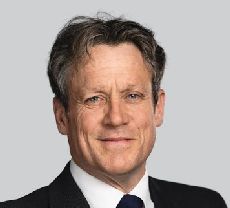 Mark Wade |
Mark Wade: ‘I have been involved in it for 33 years. Back in the 1990s, as a credit analyst, I was already taking governance and environmental considerations into account, long before the ESG approach was formalised. I remain optimistic about the sector’s prospects. The approach is now more pragmatic, with a greater emphasis on adaptation, resilience and transition on a global scale. It is essential to consider how we can transform brown economic activities into greener business models, rather than focusing exclusively on activities that are already considered green.’
Europe has long played a leading role in sustainable investing. M.W.: ‘Europe played a pioneering role and made a significant contribution to the debate on how behaviour can be changed through reporting and regulation. Asia now benefits from a second-mover advantage and can draw lessons from the European experience by adopting an approach that is less focused on reporting and more on building a RESILIENT industrial base capable of enabling the transition.’
Has Europe learned from its highly restrictive and administratively burdensome approach?
M.W.: ‘We are beginning to understand the limitations of excessive reporting, with sustainability reports running to 400 or 500 pages, in which most categories essentially contain the words “not applicable”. These reports clearly offer little value to an end Investor seeking to determine the extent to which a company is making genuine sustainability efforts.’
What developments do you expect in the analysis of risks and opportunities?
M.W.: ‘For a long time, we assessed economic activities without paying as much attention to their geographical location. Today, however, we are realising that the location of assets is essential. This approach will be at the heart of sustainable finance over the coming years, particularly when it comes to mapping assets throughout supply chains and identifying the resulting vulnerabilities. The objective is to understand precisely the risks to which a company or sector is exposed.’
Are climate-related events having an increasingly significant impact on our economies?
M.W.: ‘Absolutely. In 2022, the drought affecting the Rhine was described as an event unprecedented in 500 years. Four years later, an even more severe drought occurred. The recurrence of such events is fundamentally changing the way we model risks, with significant macroeconomic implications for companies that rely on the Rhine to transport their products. Along similar lines, we can point to the future impact of El Niño on the supply of agricultural commodities, or the shift in hurricane-prone areas in the United States, which has rendered a significant number of properties uninsurable.’
Does the shift from sustainability towards resilience mean that sustainable development has failed?
M.W.: ‘I would not describe it as a failure. The issue is rather that the mission has sometimes drifted away from its original objective, offering solutions that lacked transparency. Overwhelming companies with reporting obligations has not worked. In 2015, the Paris Agreement established a renewable energy Target that was achieved in 2025. However, energy requirements were significantly underestimated in 2015. Without the Paris Agreement, we would be facing an even more severe energy crisis today.’
How much capital will need to be committed to the transition over the coming years?
M.W.: ‘Additional financing requirements could reach USD 1.6 trillion in Latin America, USD 5 trillion in Asia and USD 1.6 trillion in Europe. Europe is particularly vulnerable to climate-related events. However, the continent has substantial financial resources that are currently parked in low-yielding investment solutions. It is essential to mobilise the savings currently held in money market funds and savings accounts – approximately EUR 10 trillion – notably to accelerate the move towards greater strategic autonomy.’
What should we expect from SFDR 2.0?
M.W.: ‘The major challenge remains the transition and how to encourage the shift from Fossil fuels to green energy. This is the question that the new regulation must address. Experience in Asia suggests that it may be preferable to prioritise rigorous and stringent standards rather than strive for complete uniformity across all companies. The system must support the economy, not hinder it. The regulation needs to engage investors in the process and establish rules that will enable financing to be mobilised across Europe. If we fail to achieve this, we will not meet our objectives.’
Which sectors offer the greatest potential in terms of transition and climate adaptation?
M.W.: ‘Infrastructure is a major area of focus. Infrastructure assets were once regarded as rather unexciting assets with limited financial value. Yet they are the arteries of the economy, and their resilience now deserves particular attention. They are becoming increasingly technologically advanced and are gaining financial value. They can also provide diversification benefits for investment portfolios, but they require capital.
Healthcare is another important investment area, with heatwaves putting ageing infrastructure under considerable strain and generating increasingly significant morbidity-related costs. Water and food supply are two other segments that deserve particular attention.’
Is defence now an integral part of the sustainability debate?
M.W.: ‘The debate has evolved. The initial draft of the European taxonomy in 2022 clearly indicated that defence was not considered sustainable. Today, it is recognised as a societal necessity. Without robust security, there can be no economic plan, no climate plan and no transition. Defence activities are not considered sustainable in themselves, but certain Article 8 funds can now incorporate defence investments into a sustainable investment product.’
